
Description
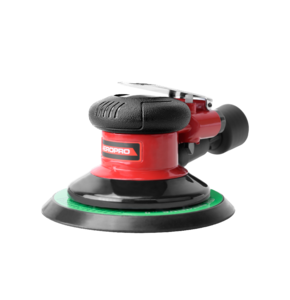
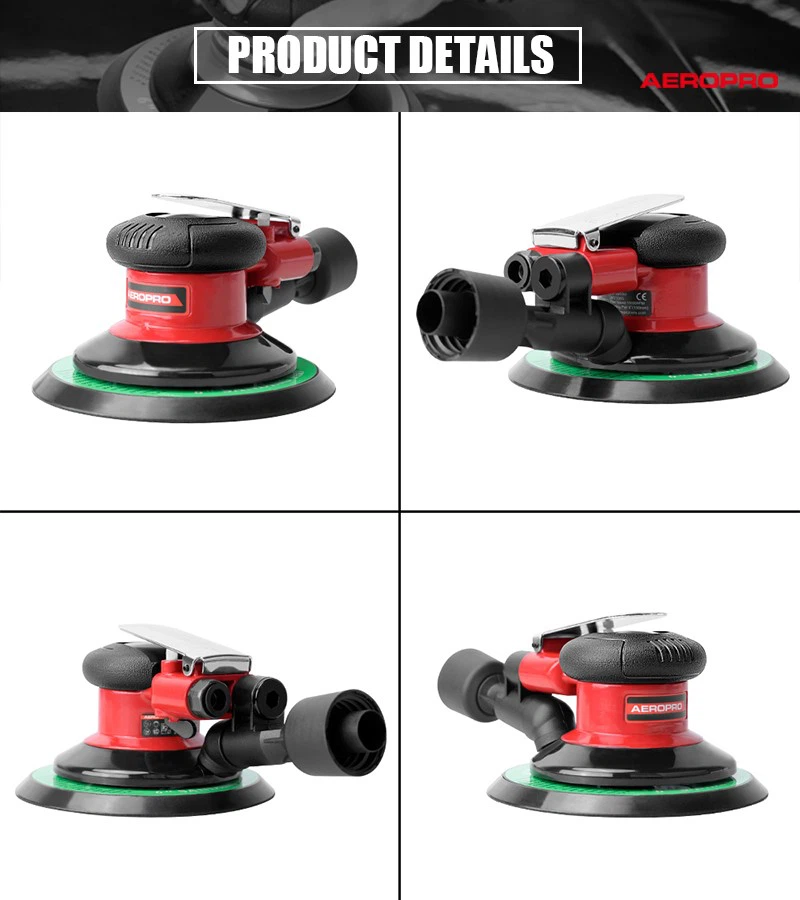
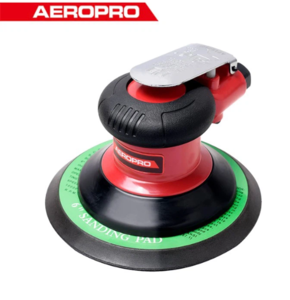
AIR SANDER 6” AP7336S AEROPRO
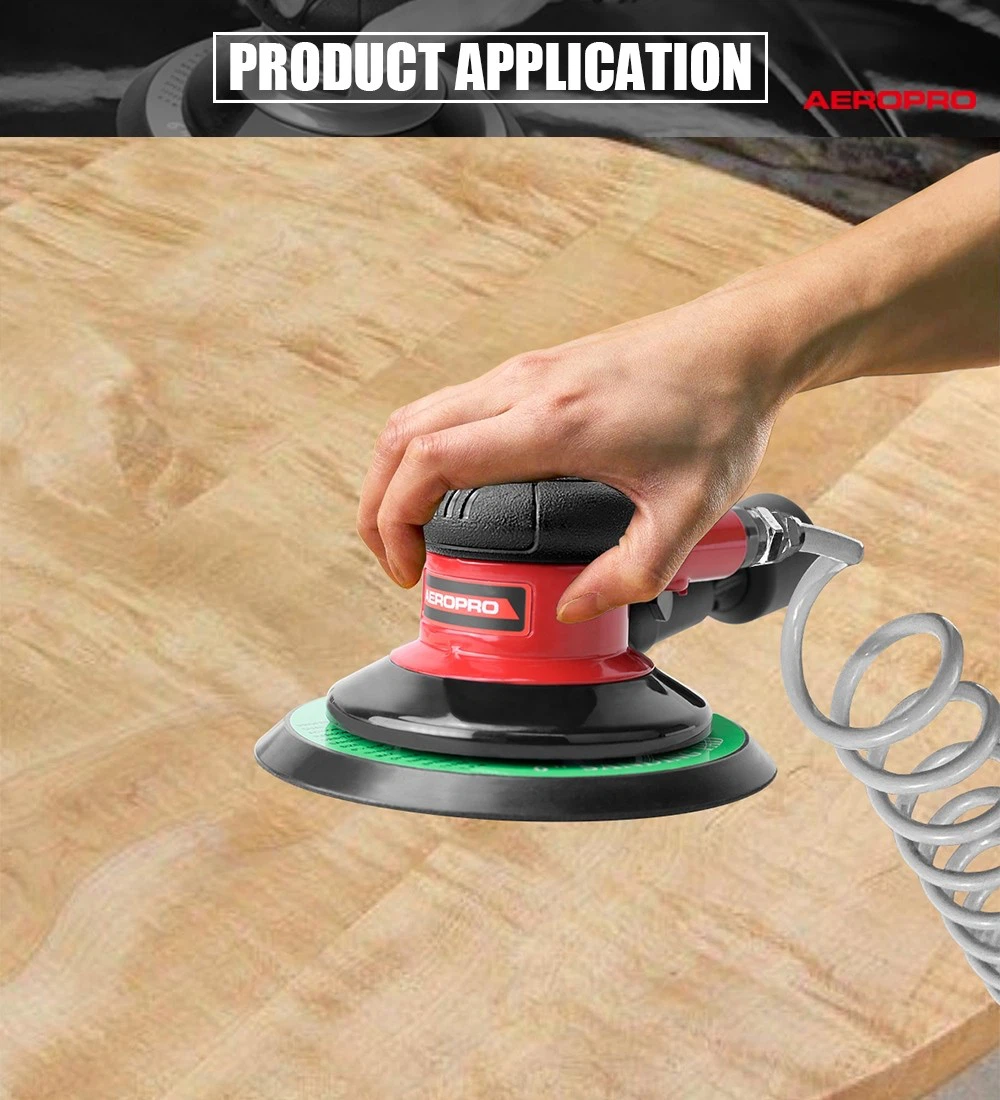
AEROPRO Pneumatic Automotive Angle Sander AP7336S is mainly used in automobile sheet metal coating operation, the surface grinding operation, carpentry work, furniture production, non-metallic surface polishing machine and the derusting and polishing of the metal surface.
AEROPRO Air Sander with 6 inch padding
Features/ benefits:
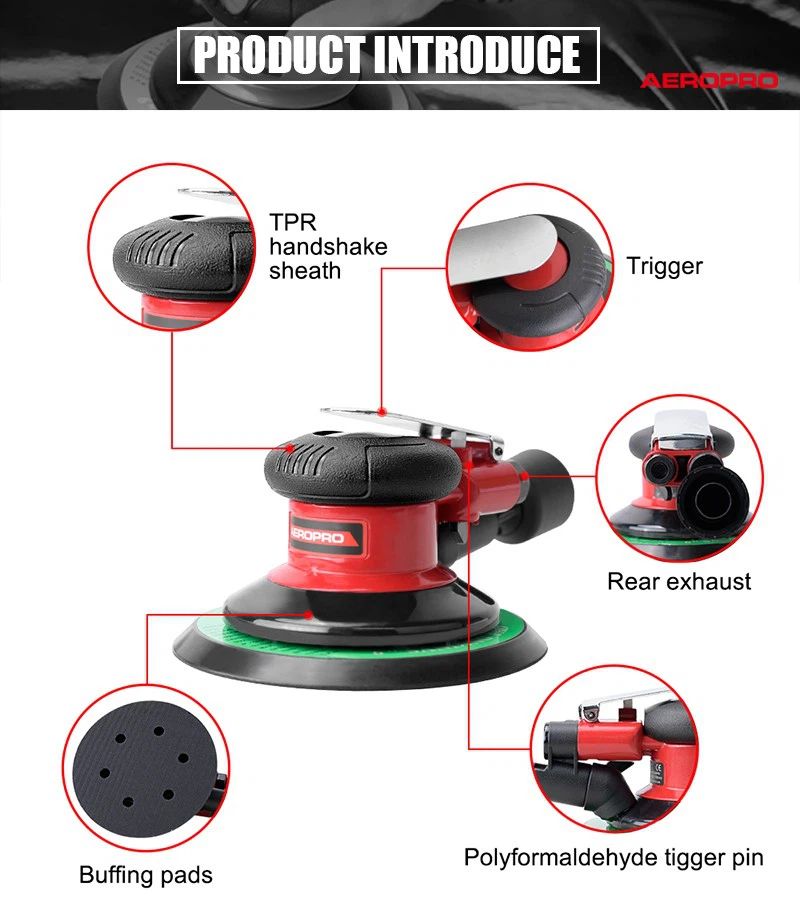
- Heat treated eccentric shaft by Ipsen imported from Germany;
- High quality bakelite rotor blade,durable and hard to deformed;
- Industrial bearing,high precision and long working life;
- Light Weight, Low vibration, Low center of gravity design;
- Perfectly Balanced Sanding Pad, Low vibration for swirl-free finishes;
- Best for all kinds vertical and overhead sanding applications,polisher of welding slag,weld,rust,burs and metal products processing residues.
Application:
- Construction
- Automobile and other fabrication
- Manufacuring and repair industries
- Mold industry
- Woodworking and furniture manufacuring
Technical Parameters :
6″150mm air sander(Rear exhaust)
Free speed Rpm:12000
Eccentric Drbit:5mm
Air Inlet:1/4″
Air Hose(ID):3/8″
Avg.Air Consumption:4.5 cfm
Sug.Air Comp.((HP):2
Net Weight:2.0Lbs, 0.92kgs
Max working pressure:90PSI
What car sanders or polisher do you need?
Speed
Most sanders will cite speed figures in terms of Rotations per Minute (RPM) – the higher the RPM, the faster the disc spins. That’s the case for the orbital sander and disc sander models, anyways.
For belt driven models, speed is given in terms of Feet per Minute (FPM) – the higher the FPM, the faster the belt surface runs. Higher FPM means a higher rate of stock removal, which translates to fewer passes and time needed to work over a surface.
For sheet sanders, speed is given in Orbits per Minute, which indicates how quickly the machine can pass the sandpaper over a given spot.
For random orbital sanders and bench-top sanders, there’s a rate of oscillation given as well. Usually, it is given in terms of times per minute – a bench-top spindle that oscillates 60 times per minute will shift the sandpaper every second. There’s a stroke figure usually provided as well, to give you an idea of the extent of the oscillations.
Size and Sandpaper
For belt sanders, there are standard belt sizes that will fit on models built for them. Smaller sanders can take belts 3 inches wide and 18 inches long, while the more popular length goes up to 21 inches long. Bench-top sanders can take belts 4 inches wide and 24 inches long, or even longer for heavy-duty sanding.
Whenever you buy sandpaper, or you are simply checking the ones that come with the sander model, take note of the grit. This figure refers to an estimate of the number of particles in each square inch of the paper – the higher the number, the more densely packed and finer these abrasive particles are.
The roughest, coarsest sandpaper have grit in the 40 to 60 grit range. 150 to 180 grit is already considered fine, while there are polishing sandpapers that have grits of 360 and above that can polish material to a satin smooth finish.
Reviews
There are no reviews yet.